Quick answer
A custom order moves through a clear sequence: prepare a use and site brief, agree the layout and dimensions, approve artwork and materials, confirm components and documents, release production against a controlled revision, inspect the finished unit, and approve packing. Locking each approval before the next stage reduces rework and makes delivery timing easier to manage.
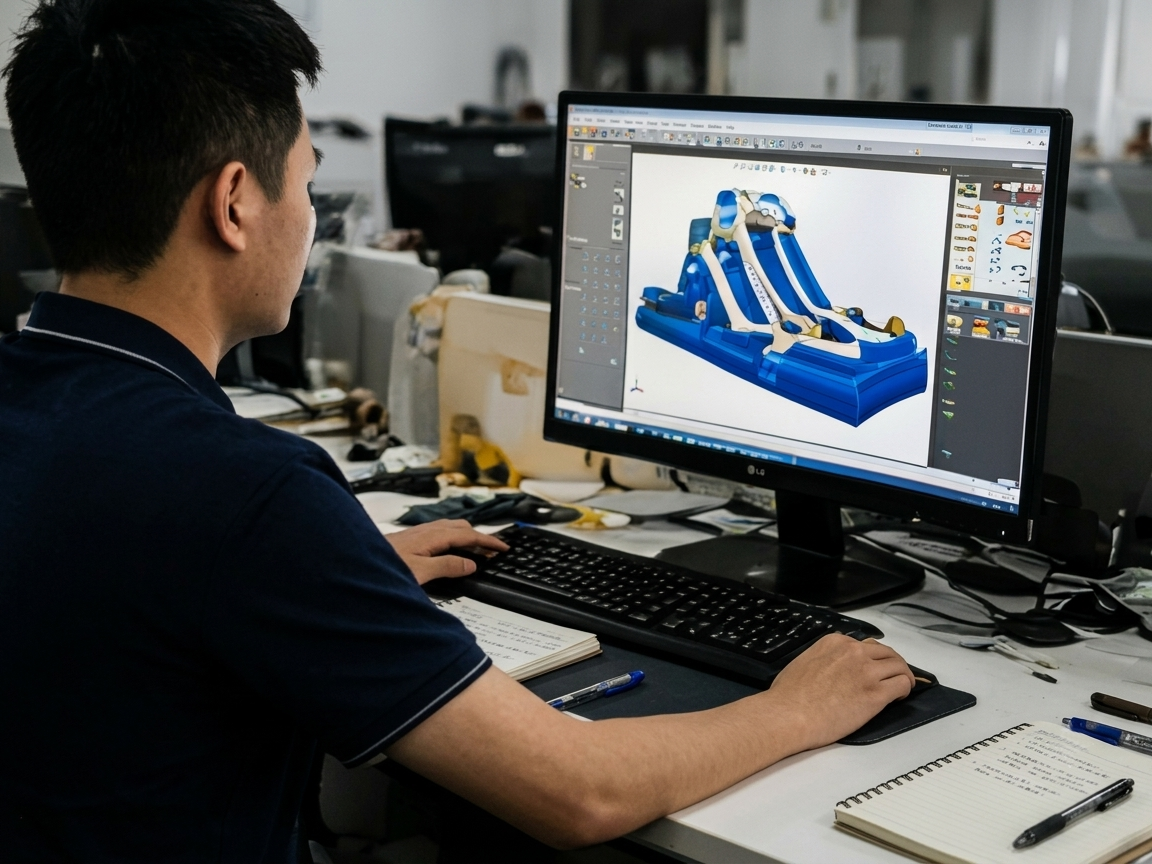
Prepare the brief before requesting design
Send the product purpose, target audience, indoor or outdoor environment, usable footprint, height limits, access routes, quantity, destination, target date, reference images, brand files, and preferred colors. For a venue project, include the site plan and how guests or participants move through the attraction. Identify what must be original and what can be adapted from a standard design.
Choose an OEM or ODM development route
OEM usually starts from a buyer-provided design or specification, while ODM usually adapts a supplier-developed concept to the buyer’s brief. These terms can vary by supplier, so the quotation should state who prepares drawings, which design revisions are included, who owns buyer-supplied artwork, and what engineering or sample work is in scope. A useful inflatable products ODM service should describe those deliverables before the buyer approves production.
Approve the structure before the graphics
Review entrances, exits, activity flow, operator sight lines, blower or pump position, anchoring points, and required clearance on the proposed layout. Then review the artwork on the actual panels and viewing angles. Keep dimensions and graphics on one revision-controlled approval so production is not working from conflicting files.
Confirm the order specification
The order record should name the final model, inflated dimensions, material, colors, accessories, electrical components, destination, applicable documents, inspection expectations, packing details, price, lead-time basis, and shipping term. Mark assumptions explicitly. Ask the factory to flag anything that changes safety, production method, price, or schedule before you release the order.
Inspect and archive the approved build
Agree what evidence the buyer will receive, such as in-process photos, inflation-test documentation where applicable, final inspection images, and package details. Compare the finished unit with the approved drawings and agreed scope, then save the final artwork and specification for future repeat orders.
Decision before quotation
What this guide means for a commercial buyer
A custom inflatable is ready for production only when product layout, artwork, dimensions, material, components, and order scope are approved together in a traceable revision.
Buyer checklist
Information to confirm before comparing suppliers
- Use case, site constraints, target users, quantity, and destination
- Reference images, logo files, colors, and requested dimensions
- Approved structural drawing and panel-specific artwork revision
- Material, blower/pump, accessories, documents, and inspection scope
- Packing, freight term, target date, and change-control contact
Risk control
Common mistakes to avoid
Approving artwork without checking the physical layout and viewing angle
Starting production from chat images instead of an approved drawing
Changing artwork or dimensions after order release without schedule review
Factory conversation
Questions to send before the order is released
- Which files and decisions do you need before design starts?
- How will the final drawing and artwork revision be identified in production?
- Which changes after approval affect price, materials, or lead time?
- What inspection and packing evidence will be shared before shipment?
Buyer FAQ
Custom Inflatable OEM & ODM Process FAQ
What should I send first for a custom inflatable quote?
Send the use case, reference image or sketch, desired dimensions, venue/site limits, quantity, destination, logo or artwork, target date, and any required components or documents. Identify which features are essential and which can change.
What should an ODM inflatable manufacturing service include?
Ask the factory to define concept adaptation, drawing and layout work, included revision rounds, artwork responsibilities, the approval file, sample or prototype scope if needed, production controls, inspection, and export packing. Confirm ownership and permitted use of buyer-supplied artwork in writing.
What is the difference between OEM and ODM for inflatables?
OEM commonly describes manufacturing to a buyer’s supplied design or specification, while ODM commonly starts from a supplier design that is adapted. Ask the supplier to state which design work, artwork ownership, and production scope the quotation includes.
Can a design or logo change after production starts?
It may be possible, but it can affect material cutting, panel layout, cost, and schedule. Submit changes through a documented revision and get written confirmation before expecting the change to appear in the finished unit.
Who owns the artwork and custom design files?
Ownership and permitted use depend on the contract and the rights in the supplied artwork. Agree in writing who owns buyer-supplied logos, custom drawings, and reusable design files, and confirm permissions for any third-party characters or marks.
Explore relevant commercial inflatables
Compare the product categories that relate to this buying guide, then send YIC the models, quantity, destination, and customization details you want quoted.
Related buyer resources
Talk with a commercial inflatable manufacturer
Have a product list, custom idea, or venue plan? Send your requirements to YIC and include the destination market, quantity, dimensions, artwork, and target delivery date. You can also browse the commercial product catalog.